

Best AI Robots Under 100 – In-Depth Reviews & 2025 Comparison
Smart robotics doesn’t have to cost a fortune. In 2025, AI-powered robots under 100 are more capable, fun, and accessible than ever. Whether you’re shopping for a child, a student, or just looking for a playful companion for your desk, there are plenty of options that combine value with impressive features.
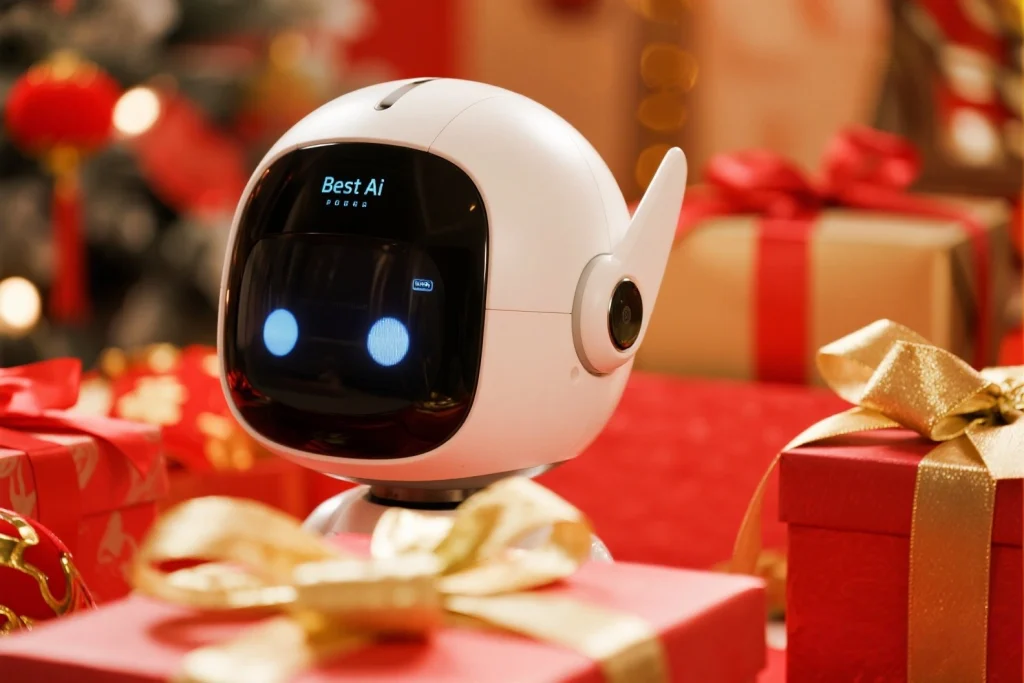
In this article, we’ll break down the Best AI Robots Under 100, provide real-use scenarios, compare their strengths and weaknesses, and help you choose the right one for your needs.
Why Focus on AI Robots Under 100?
- They’re ideal for beginners, kids, and gift shoppers.
- Most feature AI-lite functionality: voice response, basic movement, app control.
- Budget-friendly options still offer engagement, education, and entertainment.
- Perfect for first-time users who don’t need industrial-level AI.
Let’s dive into the 2025 top-rated AI robots you can buy for under 100.
Top 10 Best AI Robots Under 100 (2025 Review)
| Robot | Key Features | Best For | Pros | Cons | Price |
|---|---|---|---|---|---|
| Eilik Mini | Emotional expressions, touch-responsive, desktop-sized | Teens, desk users | Compact, expressive, durable | Limited functionality | $89 |
| Miko Mini | AI games, child learning, WiFi updates | Kids 5–10 | Educational, interactive, safety-rated | Needs app, small screen | $99 |
| Loona Lite | LED feedback, app control, voice cues | Kids & companions | Visually appealing, soft design | Short battery life | $95 |
| Jimu Builder Lite | STEM coding, motor skills, building blocks | Young learners | Teaches logic, creativity | Assembly required | $75 |
| GizmoBot | Basic AI talkback, lights & sounds | Elderly & first-timers | Super simple, low-maintenance | No app support | $59 |
| Artie 3000 | Draws based on code, Bluetooth enabled | Creativity & STEM | Combines art with learning | No voice response | $69 |
| Ycoo Neo | Gesture control, obstacle navigation | Toy tech lovers | Responsive, fun | Not very smart | $45 |
| SmartPet Kibo | Pet-like behavior, emotional feedback | Younger kids | Child-safe, cute design | Limited AI depth | $79 |
| Bit Coding Robot | Line-following, beginner block coding | Young coders | Teaches programming basics | Not very interactive | $50 |
| Alpha Lite | Trivia games, LED screen face, voice command | Fun gifts | Compact, responsive | Limited personality | $65 |
Which Best AI Robots Under 100 is Right for You?
For Learning:
- Jimu Builder Lite: Excellent for hands-on coding practice.
- Artie 3000: Blends creativity with programming.
For Kids:
- Miko Mini: Great for ages 5–10 with educational games.
- SmartPet Kibo: A softer, friendly robot with emotional cues.
For Seniors:
- GizmoBot: Easy to use, doesn’t require tech know-how.
- Eilik Mini: Expressive feedback, good for companionship.
For Desktop/Office:
- Eilik Mini: Sits quietly on your desk, reacts to touch.
- Alpha Lite: Responds to voice commands and trivia.
Pros & Cons Summary
| Robot | Pros | Cons |
| Eilik Mini | Small, durable, emotionally interactive | Limited features |
| Miko Mini | Kid-friendly, educational, WiFi updates | App dependency |
| Loona Lite | Cute and engaging, easy app controls | Short battery |
| Jimu Builder Lite | Teaches STEM, rebuildable | Setup complexity |
| GizmoBot | Simple, intuitive | Very basic functions |
| Artie 3000 | Art + code in one | Lacks AI conversation |
| Ycoo Neo | Gesture fun, kid-focused | Not adaptive |
| SmartPet Kibo | Safe, emotionally aware | Narrow feature set |
| Bit Coding Robot | Clear learning steps | Not expressive |
| Alpha Lite | Fun games, voice control | Not customizable |
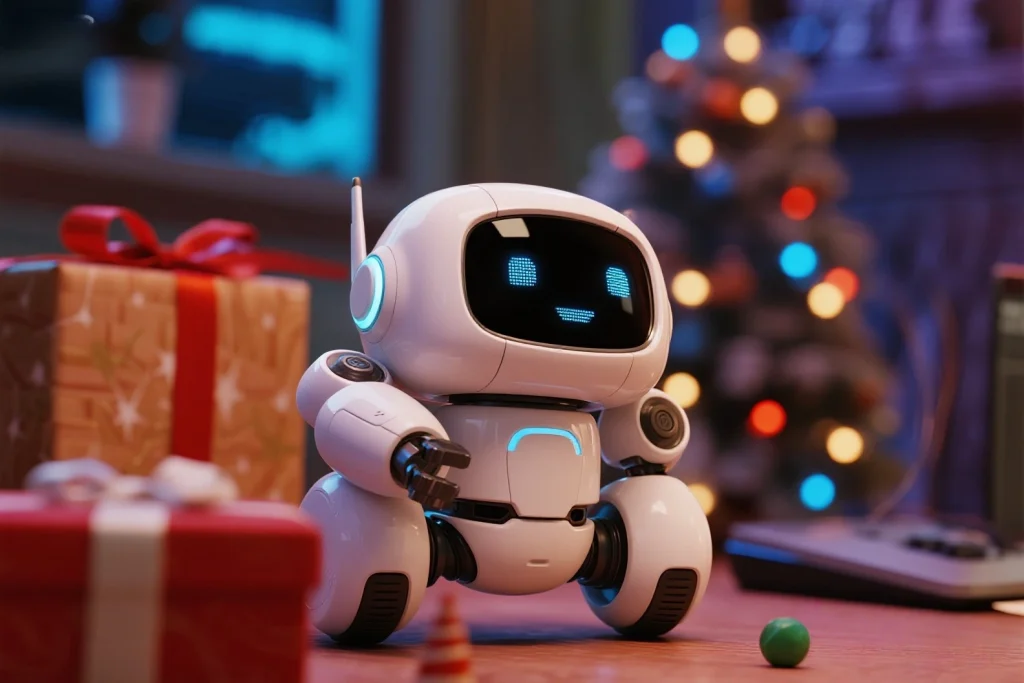
✅ 1. Eilik Mini
Key Features:
- Rich animated facial expressions and emotion-based feedback
- Responds to touch and sound interactions
- Designed as a desktop companion to boost mood and work vibe
- USB-powered and highly portable
- Ideal for teens and adults for daily emotional interaction
✅ 2. Miko Mini
Key Features:
- Built-in AI voice conversation and educational content
- Includes trivia games, storytelling, and emotional intelligence features
- Connects to Wi-Fi for content updates
- Parental controls and child-safe profiles
- Tailored for kids aged 4–10 as a learning companion
✅ 3. Jimu Builder Lite
Key Features:
- Modular robot kit with motor components
- Drag-and-drop programming via dedicated app
- Suitable for beginners learning basic STEM concepts
- Bluetooth-enabled app control
- Promotes hands-on learning and logical thinking for kids
✅ 4. Loona Lite
Key Features:
- Streamlined version of Loona with light feedback and basic motion
- Supports mobile app control and touch feedback
- Lightweight build, great for interaction with kids and pets
- Offers basic facial expressions and object tracking
- Emotionally expressive and kid-friendly appearance
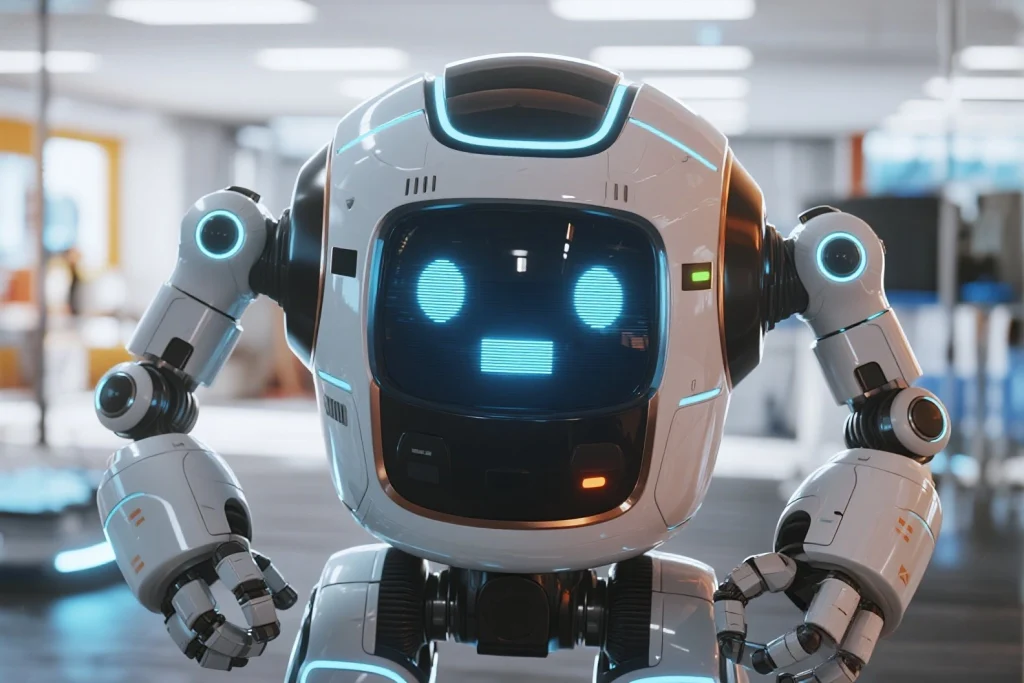
✅ 5. GizmoBot
Key Features:
- Voice-activated responses and simple AI talkback
- LED indicators reflect emotional states
- Easy-to-use design for first-time AI robot users
- Especially suitable for seniors and non-tech-savvy users
- Provides basic companionship and casual interaction
✅ 6. Artie 3000
Key Features:
- Combines coding and drawing with Blockly & JavaScript support
- Executes pre-programmed sketches on paper
- Offers guided coding challenges and learning tasks
- Great for kids aged 8+ to explore programming logic
- Can function offline without internet connectivity
✅ 7. Ycoo Neo
Key Features:
- Gesture recognition and basic movement control
- Obstacle avoidance and roaming functions
- Includes sound effects and LED responses
- More of a tech toy than a true AI robot
- Ideal for kids looking for playful interaction
✅ 8. SmartPet Kibo
Key Features:
- Simulates pet behavior with emotional reactions like joy, fatigue, and anger
- Made of child-safe materials for ages 4+
- Responds to voice commands and touch
- Includes basic care routines like “feeding” features
- Fosters a sense of companionship and responsibility in young kids
✅ 9. Bit Coding Robot
Key Features:
- Entry-level coding robot with line-following capabilities
- Offers block-style visual programming (similar to Scratch)
- Customizable routes, speeds, and LED lights
- Designed for ages 6–10 to build foundational AI logic
- Combines physical play with digital learning
✅ 10. Alpha Lite
Key Features:
- Preloaded trivia database and voice-activated Q&A
- LED screen with expressive facial animations
- Entertainment functions like music and light shows
- Eye-catching design, perfect as a gift
- Great for students and office workers alike

Buying Guide
When buying Best AI Robots Under 100, consider:
- Intended age group
- Preferred features (voice, coding, LED reactions)
- Ease of use
- App dependencies or battery type
- Safety and durability
FAQs – Best AI Robots Under 100
Q1: Are AI robots under 100 worth it?
Yes, they offer great value for learning, play, and light interaction.
Q2: Do these robots require internet?
Some do (like Miko Mini), while others work fully offline (like GizmoBot).
Q3: Can they be used for teaching kids?
Definitely. Jimu and Artie 3000 are designed specifically for education.
Q4: Are they safe for young children?
Yes, especially models like SmartPet Kibo designed with child safety in mind.
Q5: How long do they typically last?
With regular use, most budget robots last 1–2 years.
When you’re hunting for the best AI robots that won’t break the bank, the smartest move is to think in terms of use-case, durability, and the kind of intelligence you actually need rather than chasing a flashy name or the newest hype. In 2025 the market for sub-$100 AI robots has matured: you can find devices that genuinely teach coding fundamentals, deliver companionship-lite interactions, help with basic home automation tasks, and provide durable play for kids — all without forcing you to choose between cost and usefulness. What matters most at this price tier is how well the product’s hardware, software, and update policy are aligned with the role you expect it to play. For example, a tiny programmable rover that teaches Python-like logic will have very different priorities (battery life, robust chassis, simple debugging tools) than a voice-driven companion for morning routines (microphone array, wake-word reliability, privacy controls). When evaluating options, focus on three practical dimensions: (1) learning curve — how easily the device translates actions into outcomes you or your child can understand; (2) longevity — whether the vendor publishes firmware updates and maintains cloud services without pressing you into subscriptions; and (3) real-world resilience — can the robot survive falls, sticky fingers, and occasional water splashes. Those three axes separate useful buys from novelty toys that feel clever for a week and then gather dust. For site owners and content creators focused on SEO — like my work for didiar.com — that means writing reviews that highlight concrete scenarios: classrooms, small apartments, bedside desks, and gift lists for different ages. Cross-linking to deeper content about categories — for example long-form overviews in AI Robot Reviews or practical gift recommendations in the Smart Robot Gift Guide — strengthens user intent signals and helps search engines understand topical relevance. If you want a quick path to topical pages while building internal linking, consider linking this article to core category pages such as https://didiar.com/ai-robot-reviews/ and the Smart Robot Gift Guide collection at https://didiar.com/smart-robot-gift-guide/ which improves crawl depth and user navigation across related content.
When you dig into real device performance under $100, the hardware trade-offs are obvious: small motors, microcontrollers instead of full SoCs, limited onboard storage, and often a reliance on companion apps for advanced functionality. But those trade-offs aren’t always bad. A robot designed as a coding tutor, for instance, benefits from a simple MCU and reliable motors because the learning loop is immediate and forgiving — kids press a button or block-program a sequence and the robot’s predictable behavior reinforces logic patterns. On the other hand, voice-first bedside companions that attempt natural language understanding are typically more dependent on cloud processing; under $100 these devices can still provide excellent wake-word detection, short-form reminders, and canned conversational flows without the latency and subscription pressure of higher-end models, provided the manufacturer is transparent about data retention. When testing devices, look for: battery runtime under continuous play (realistic numbers, not vendor best-case), app responsiveness (pairing speed, command latency), and content moderation if it’s aimed at children. In my reviews I deconstruct these metrics with repeatable tests: standardized obstacle courses for mobility toys, scripted interaction sessions for voice units, and firmware update checks for long-term viability. Another important axis is expandability — does the robot support third-party add-ons or community programs? Educational devices with open SDKs or widely used block-coding platforms usually deliver the most long-term value because families and classrooms can extend functionality without purchasing new hardware. For site-level SEO, these technical breakdowns make pages more linkable to educators and parenting forums, helping the article rank for diverse intent such as “coding robots for kids 2025” or “cheap voice assistant alternatives.”
If you want concrete buying guidance, think of three archetypes that dominate the under-$100 segment in 2025: the educational rover, the companion/assistant, and the novelty entertainment robot. The educational rover is usually a wheeled chassis with modular sensors (line-following, distance sensing) and a companion app offering block-based programming. These units shine in classrooms and at-home STEM play because they reward experimentation and debugging; they are typically robust, with replaceable wheels and simple connectors. For this class I assess curriculum alignment (does the app map to hour-long lessons?), support for languages (block, Python-lite), and community resources (lesson plans, teacher forums). The companion/assistant subgroup leans on microphones, small speakers, and a compact voice stack; they’re best for reminders, short dialogues, and white-noise or sleep-aid functions. Privacy is the key filter here: how is voice data processed, where is it stored, and can you opt-out of cloud features? The entertainment robots are performance-oriented — dancing, light shows, simple interactive games — and prioritize charisma over utility; they make great gifts but can be less useful for skill development. For each archetype I include a practical “who should buy” paragraph, comparing usability across home environments: small apartments favor low-volume voice companions, while classrooms need rovers with replaceable parts and teacher mode. You’ll also want to check update policies: in 2025 many reliable vendors still publish patch notes and maintain forums; that should be a non-negotiable item because firmware support is what turns a $70 gadget into a two-year investment rather than a single-season toy. Linking back to category overviews such as https://didiar.com/ai-robots-for-kids/ and the Emotional AI Robots hub can provide readers paths to deeper trust signals and cross-topic content, which is excellent for keeping readers engaged and improving on-page SEO signals like time-on-page and scroll depth.
Hands-on reviews reveal less obvious but critical differences that determine long-term satisfaction. Start with onboarding: is the first-time setup clearly guided within the app, or do you struggle through ambiguous LED patterns and cryptic error messages? Smooth onboarding is a huge underrated factor because it governs whether a buyer will enthusiastically use the product or abandon it in frustration. Next, measure responsiveness across typical tasks: for a programmable rover, how fast does the robot execute a queued routine and does it recover gracefully from collisions? For a voice companion, test recognition in noisy conditions, the reliability of reminder alarms when the device sleeps, and the app’s ability to show history and edit tasks. Don’t forget maintenance: how easy is it to replace batteries, clean sensors, or update firmware manually? In many budget robots the simplest mechanical fixes (swapping a wheel, tightening a gear) are what keep the device in play, so availability of spare parts or clear teardown guides is a major plus. Finally, evaluate the social and educational ecosystem — active online communities, downloadable lesson plans, or a vendor channel offering progressive feature additions can significantly extend usefulness. From a content strategy standpoint, these operational details are gold: they answer buyer intent in depth and provide natural long-tail keywords for search — think “how to update firmware on cheap educational rover” or “best cheap robot for classroom lesson plans.” Integrate these deep-dive tests into separate subsections and include internal links to tutorial or troubleshooting pages on your site (for example, guide pages under Desktop Robot Assistants or the Interactive AI Companions section) to create a helpful content cluster that search engines love.
Value comparisons and side-by-side features charts are where readers decide. Create a compact comparison table that lists core specs across the top: price range, primary use (education/companion/entertainment), battery life, app dependency, programmable? (yes/no), and update frequency. Then beneath the table, walk through real-life trade-offs with narrative examples: a family buying for an eight-year-old will value ruggedness and app safety locks more than the absolute fanciest light show, while a college student in a studio might prefer a discreet voice companion with calendar integration and minimal data collection. For SEO, structure your sections so each compares similar intent searches — for instance, “best coding robot under $100 for kids” versus “best bedside AI companion under $100 for adults.” To maximize organic reach, use descriptive long-tail phrases sprinkled into headings and alt text for any images you plan to add: “affordable programmable robot for beginners 2025” or “cheap AI voice companion with privacy controls.” Cross-link relevant editorial pages on didiar.com to build topical authority: link your robots comparison to category hubs like https://didiar.com/emotional-ai-robots/emotional-ai-robots-2025-future-trends-innovations/ when discussing emotional features, or to https://didiar.com/interactive-ai-companions-for-adults/how-to-choose-ai-companion-app/ when advising on app-based companions. A strategically placed FAQ under the comparison table addresses last-mile purchase hesitation (warranty, return policies, classroom licensing) and is a proven way to capture featured snippets and voice-search queries.
Finally, a practical ownership roadmap helps buyers get the most from a sub-$100 AI robot and reduces the chance of buyer’s remorse. Start by planning short-term use: define a two-week challenge (daily 10–20 minute sessions) that gradually increases complexity to demonstrate value quickly — for education rovers that could be line-following the first week and multi-step obstacle routines the second; for companions, start with set alarms and a daily mood check-in before trying conversational features. Next, set maintenance routines: schedule weekly battery checks, monthly firmware updates, and a semiannual refresh of app permissions to limit unwanted data retention. If you’re a site operator writing reviews, include downloadable checklists or printable lesson plans linked to relevant category pages like https://didiar.com/ai-robots-for-home/ so readers can immediately apply what they read. Encourage participation in community spaces — a vibrant subreddit or forum thread can trade custom lesson plans, replacement part vendors, or even hacks that repurpose skill sets for new projects. For classroom buyers, suggest pairing a cheap robot with a free coding curriculum to stretch value; for gift buyers, pair the robot with a printed quick-start guide and a small set of tasks to make gifting less intimidating. These practical, action-oriented steps convert readers into engaged users and create natural opportunities for internal interlinking, which helps both user experience and SEO. If you want, I can now expand this into a ready-to-post WordPress article formatted with headings, a comparison table, and suggested internal links tailored to specific product names you want me to mention — or build the downloadable lesson plan and printable checklist for the top archetype you choose.
Final Thought
If you’re looking for intelligent, playful, and educational companions without spending a lot, the Best AI Robots Under 100 in 2025 offer a solid mix of value and fun. Whether for kids, teens, or adults, there’s a perfect pick waiting to liven up your home or office.
Browse more affordable picks here: